Blog

  • Card fraud: what you can do about unauthorised charges

    Card fraud: what you can do about unauthorised charges

    Is there a charge on your credit card statement or bank statement that you did not make? Calm, quick action helps. This article summarises the key steps.

    Act immediately

    • Have the card blocked, either with your bank or via the blocking hotline 116 116. According to the consumer advice centre (Verbraucherzentrale) it does not cover every bank, so also check how your own bank lets you block a card (1).
    • Report the matter to the police, ideally through the online police station of your federal state, and give your bank the case number (1).
    • If a debit card is lost, only the police can arrange a KUNO block, which stops direct-debit payments (2).

    Ask for a refund

    In principle, the bank must refund unauthorised payments without delay (§ 675u BGB), unless it proves gross negligence or intent (1). The Verbraucherzentrale advises asking for the refund in writing or by email, listing the charges precisely and setting the bank a deadline of three weeks (1). The bank has to prove that the payment was authenticated; according to the Federal Court of Justice (BGH), entering the correct PIN alone is not enough (1). By law, after a loss or theft the bank can claim at most 50 euros in damages; in cases of fraud, intent or gross negligence the payer is fully liable. After you have reported the block, you are not liable for later use (3).

    Mind the deadlines

    Report unauthorised payments to your bank without delay once you notice them. Claims and objections generally expire if you do not inform the bank within 13 months of the debit (4). That is why you should check your statements regularly (2).

    If the bank refuses

    You can contact the arbitration body (the competent one is named in the bank’s legal notice), inform BaFin, ask the Verbraucherzentrale for individual advice, or consult a lawyer specialising in banking law (1).

    For general information about credit cards, see our guide: Credit cards: types and comparing offers

    Warning! Borrowing money costs money.

    We do not give advice and do not recommend any particular bank or card. The decision is yours. This article is not legal advice.
    Sources (checked on 17 October 2026)

    1. Verbraucherzentrale: Kreditkartenbetrug und Kontobetrug
    2. Verbraucherzentrale: Bankkarte verloren
    3. § 675v BGB, gesetze-im-internet.de
    4. § 676b BGB, gesetze-im-internet.de
  • Electricity and gas: what applies when your price goes up – and how long you can cancel

    Electricity and gas: what applies when your price goes up – and how long you can cancel

    When your electricity or gas supplier wants to raise the price, you usually get a letter. The supplier has to keep to certain deadlines, and in this situation you have a special right to cancel. Here are the main points in plain language (as of 16 October 2026).

    How early must the supplier tell you?

    That depends on your contract. In basic supply (Grundversorgung), the supplier must notify you by letter six weeks before the change and also announce it publicly, for example online. According to the consumer advice centre (Verbraucherzentrale), the increase is not effective without that public announcement (1).

    For a special tariff contract (Sondervertrag), the notice must in most cases arrive at least one month in advance, usually by letter. An email is enough only if that was agreed in the contract (1).

    A note in a customer portal alone is not sufficient. The Federal Court of Justice (BGH) ruled this way on 21 October 2025 (EnZR 97/23) (1).

    The special right to cancel

    • The supplier must point out your special right to cancel in the notice. It applies whatever the reason for the increase (1).
    • Your cancellation must reach the supplier before the increase takes effect. Example: if the price rises on 1 January, it must be there by 31 December (1).
    • The Verbraucherzentrale notes that you can cancel yourself instead of asking a new supplier to do it (1).
    • A bonus may be lost if it depends on a full year of supply (1).

    What you can check

    • Did the notice arrive on time and in the right form?
    • Does it mention the right to cancel?
    • Does it compare old and new price components, such as network charges, taxes, levies and surcharges? According to the BGH, this is required (1).

    According to the Verbraucherzentrale, price parts that are not valid can be withheld or reclaimed within three years of the invoice date (1).

    More on switching is in our guide: Electricity and gas: switch supplier.

    Note: we do not give advice and do not recommend any particular supplier or tariff. The decision is yours.

    Sources

    • Verbraucherzentrale: “Preiserhöhungen bei Strom und Gas – was ist erlaubt?”, verbraucherzentrale.de (page dated 19 Nov 2025; checked 16 Oct 2026).
  • No-claims class (SF-Klasse) when switching car insurance: what to know

    The no-claims class (Schadenfreiheitsklasse, SF-Klasse for short) shows how long you have driven without causing an accident. It helps set your premium for third-party liability (Kfz-Haftpflicht) and fully comprehensive cover (Vollkasko) (1). If you want to cancel at the end of the year, your notice must reach the insurer by 30 November (2). So it helps to know what happens to your SF-Klasse when you switch.

    Your SF-Klasse moves with you

    As a rule, you take your no-claims discount to the new insurer. You do not have to do anything: the new insurer requests your claims history electronically from your previous insurer (1). Liability and fully comprehensive cover are treated separately (1).

    What to watch out for

    • Ask your previous insurer to confirm in writing which SF-Klasse or claims history it will report, especially after an accident (2). The Verbraucherzentrale reports cases where a worse class was reported than the one shown on the premium bill (2).
    • Discount protection (Rabattschutz) only applies with your current insurer. After a switch, the new insurer usually takes the accident into account and places you in a lower class (2).
    • After an accident you caused, you are moved down the following year. What counts is the number of claims, not their size (1). Partial cover (Teilkasko) claims such as broken glass, storm or theft do not lead to a downgrade (1).
    • If you pay the insurer back the cost of a claim yourself, you keep your class. After settling the claim, the insurer must tell you the costs (1).

    If your car was not insured for a while

    If the break lasts less than six months, your discount keeps improving. If it lasts more than six months, it stays the same. If it lasts more than twelve months, claim-free years are deducted step by step, and after more than seven years the discount is lost completely (1).

    How large the discount is in each class is set by each insurer in its terms (1). So when comparing, look at the classification as well, not just the price.

    Read more: Guide: car insurance – compare and switch. We do not give advice and do not recommend any particular insurer. You make the decision yourself.

    Sources (checked on 15 October 2026)

    1. Die Versicherer (GDV) – Was ist der Schadenfreiheitsrabatt? (31.01.2024)
    2. Verbraucherzentrale – Kfz-Versicherung überprüfen und mehrere hundert Euro sparen (as of 08.10.2025)
  • Account switching service: how your bank must help you change your current account

    Opening a new current account (Girokonto) is quick. The hard part is moving your salary, rent, standing orders and direct debits to the new account. You do not have to do this alone: banks and savings banks (Sparkassen) are legally required to help you switch if you ask. This is called Kontenwechselhilfe, the account switching service (1)(2).

    When the obligation applies

    The switching service applies if both banks are based in Germany and both accounts are held in the same currency (1). If you move to a bank in another EU country, your current bank must still cooperate and give you, for example, the list of your standing orders. The foreign bank, however, is not obliged to help (2).

    How the switch works

    • You sign an authorisation for the switching service. Both banks must give you a form without delay if you ask, and you receive a copy (1). In it you decide which steps the banks take over and from which date the switch applies (1).
    • Within two business days, the new bank asks the old bank to cooperate (1).
    • Within five business days, the old bank sends you and the new bank a list of standing orders, information on direct debit mandates, and details of incoming transfers and direct debits from the past 13 months (1).
    • Within five business days of receiving the lists, the new bank sets up the standing orders you want, accepts direct debits and tells, for example, your employer your new account details (1).
    • On the agreed date, the old bank transfers any remaining positive balance and closes the old account. It may not block your cards before that date (1).

    What switching costs

    A bank may only charge a fee if you have agreed to it. The fee must be reasonable and based on the bank’s actual costs (1). Access to your data on standing orders and direct debits, sending the lists and closing the old account are always free of charge (1).

    Practical tips

    • Keep the old and the new account running side by side for a while (2).
    • Check the lists and remove standing orders or direct debits you no longer need (2).
    • If you suffer a loss because a bank breaks its obligations, the banks are liable to you (1)(2). You can complain to BaFin or to the bank’s arbitration body (Schlichtungsstelle) (2).

    Read more: Guide: bank account – open, compare and switch. We do not give advice and do not recommend any particular bank. You make the decision yourself.

    Sources (checked on 14 October 2026)

    1. Federal Ministry of Justice / gesetze-im-internet.de – Zahlungskontengesetz (ZKG), §§ 20–26
    2. Verbraucherzentrale – Banken müssen beim Kontowechsel helfen (as of 09.10.2026)
  • Slow mobile internet: how to prove it

    Is your mobile internet much slower than your contract says? Since 20 April 2026, the Bundesnetzagentur (Germany’s Federal Network Agency) has had a set procedure you can use to prove it (1).

    Your rights

    If the speed deviates from the agreed speed significantly, continuously or regularly, you can reduce your monthly payment or terminate the contract early (extraordinary termination) (1). You provide proof using the Bundesnetzagentur’s measurement procedure (1).

    According to the Verbraucherzentrale (consumer advice centre), before an extraordinary termination you first set the provider a written deadline to deliver the agreed service (3).

    How the measurement works

    • Download the free app “Breitbandmessung Nachweisverfahren Mobilfunk” from the Bundesnetzagentur in a common app store (1)(2).
    • As a rule, 30 measurements are needed: six measurements on each of five calendar days (1).
    • If the proof is already there after three measurement days, the measurement campaign ends early (1).
    • At the end you receive a measurement report as a PDF. Keep it (3).

    When the deviation counts as significant

    The benchmark is the estimated maximum speed stated in your contract. Depending on the household density where you are, deductions apply: with high density at least 25 percent of that speed must be reached, with medium density 15 percent and with low density 10 percent (1). If this value is not reached on at least three of the five measurement days, the deviation counts as significant (1).

    Good to know

    • Check your contract documents for the estimated maximum speed.
    • The Verbraucherzentrale offers a reduction calculator that creates a letter to your provider from your measurement results. It is only an initial assessment and does not replace individual advice (3).
    • For internet at home (fixed line) there is a separate procedure with a desktop app from the Bundesnetzagentur (2).

    More on this: Guide: home internet – compare and switch. We do not give advice and do not recommend any particular provider or tariff. You make the decision yourself.

    Sources (checked on 13 October 2026)

    1. Bundesnetzagentur – Bundesnetzagentur veröffentlicht Regelungen für den Nachweis einer Minderleistung im Mobilfunk (press release of 15 April 2026)
    2. Bundesnetzagentur – Nachweis Minderleistung leicht gemacht
    3. Verbraucherzentrale – Langsames Internet mobil? Minderungs-Rechner der Verbraucherzentrale (as of 24 April 2026)
  • Basiskonto: your right to a bank account in Germany

    In Germany, very little works without a current account (Girokonto): wages, rent, your phone contract and electricity instalments usually run through one. Still, newcomers are sometimes turned away by a bank. That is what the basic account – the Basiskonto – is for.

    Who is entitled

    Every consumer legally residing in the EU is entitled to a Basiskonto. This explicitly includes people without a permanent address, asylum seekers and people with a Duldung (temporary suspension of deportation) (1)(2). There is no entitlement if you mainly want to use the account for business purposes (1). The obligation applies to all institutions offering payment accounts to consumers – savings banks (Sparkassen), Volksbanken, commercial banks and online-only banks (1).

    How to apply

    • You apply in writing using the official form set out by law. BaFin, Germany’s financial supervisor, provides it on its website (1)(4).
    • You need to prove your identity, for example with a passport or ID card. Asylum seekers can show their Ankunftsnachweis, people with a Duldung their Duldung notice (1).
    • The bank has ten business days to review your complete application and make the account available to you (1)(2).

    What the account does – and doesn’t

    With a Basiskonto you can deposit and withdraw cash, make transfers, use standing orders and direct debits, and pay by card. If the bank offers online banking, it must offer it for the Basiskonto too (1)(2). The bank does not have to give you an overdraft (Dispo) (1)(2). The account does not have to be free, but fees must be reasonable (1)(2). A Basiskonto can also be run as a garnishment-protected account (P-Konto) (1).

    If the bank says no

    A bank may refuse only for a few reasons set out in law – for example if you already have a usable payment account in Germany or cannot sufficiently prove your identity (1)(3). If the bank refuses or does not respond within ten business days, you can ask BaFin to open administrative proceedings. They are free of charge and there is no deadline for applying (3). BaFin can order the bank to open the account for you (1)(3). You can also turn to a dispute resolution body or a civil court (2)(3).

    Keep a copy of your application and any written refusal: both belong with your application to BaFin (3).

    More: Guide: opening, comparing and switching a bank account. We do not give advice and do not recommend any particular bank; the decision is yours.

    Sources (checked on 13 October 2026)

    1. Verbraucherzentrale – Fragen und Antworten zum Basiskonto (as of 28 October 2024)
    2. BaFin – Basic payment account
    3. Federal administration portal – BaFin administrative proceedings after a Basiskonto refusal (Section 48 ZKG)
    4. BaFin – Form: Antrag auf Abschluss eines Basiskontovertrags
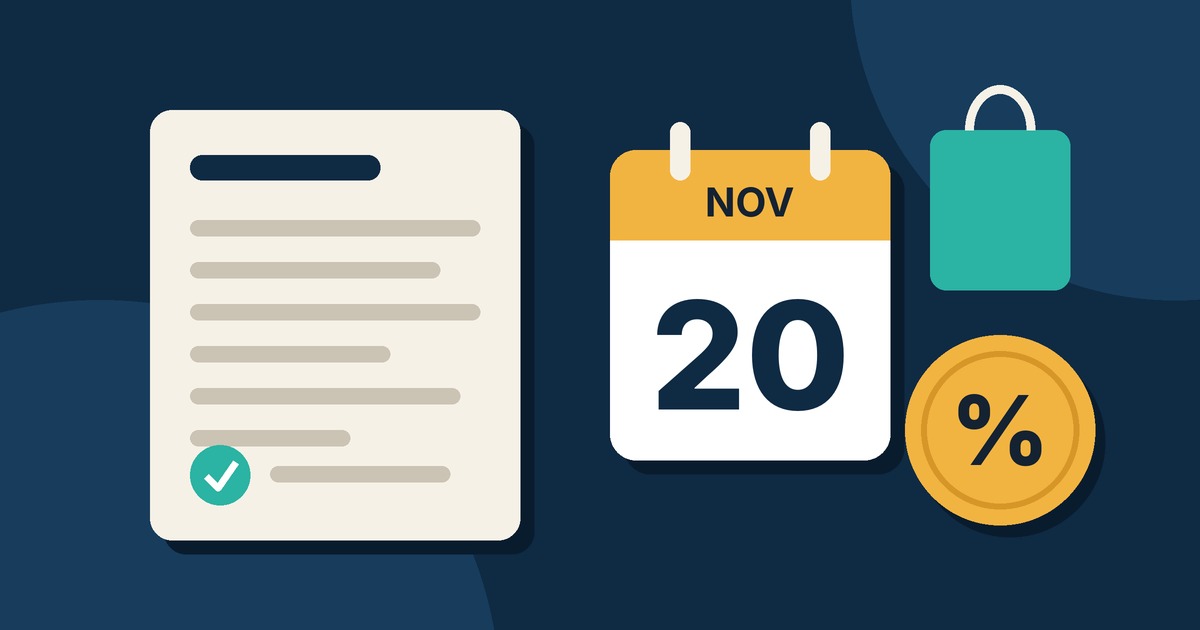
  • Consumer credit in Germany: what changes from 20 November 2026

    Consumer credit in Germany: what changes from 20 November 2026

    On 17 April 2026 the Bundestag passed a law that brings EU Directive 2023/2225 on consumer credit agreements into German law (1)(2). The new rules for consumer credit apply from 20 November 2026 (3)(4). Here is what changes according to official sources.

    Warning! Borrowing money costs money.

    More types of credit are covered

    Consumer protection rules will also cover small loans of up to 200 euros, loans without interest or fees, loans with a term of up to three months and “buy now, pay later” models (2). Until now such financing was partly exempt; in those cases there was no creditworthiness check either (3). Debit cards with deferred payment remain exempt (2).

    What else changes

    • Lenders have to give you more information before you sign (2).
    • For general consumer loans (Allgemein-Verbraucherdarlehen), text form (Textform) will be enough (2).
    • If the information you were given was incorrect, the withdrawal period (Widerruf) is twelve months and 14 days at most. An unlimited right of withdrawal will no longer exist (2).
    • If the creditworthiness check is based on automated data processing, you have the right to have it reviewed by a human (2).
    • Advertising for credit must carry a clear warning, for example “Achtung! Kreditaufnahme kostet Geld” (4).

    What you can keep in mind already

    BaFin, the German financial supervisor, points out that “buy now, pay later” is also credit: you take on debt that has to be repaid (3). In a BaFin survey from April 2025, 14 percent of users said they had lost track of their open bills at least once (3). BaFin advises looking at the total amount, counting open instalments from other financing and comparing the annual percentage rate (effektiver Jahreszins) and the term of offers (3).

    More: Guide: how to compare consumer loan offers. We do not give advice and do not recommend any provider; the decision is yours.

    Sources (checked on 11 October 2026)

    1. Deutscher Bundestag – Bundestag beschließt Gesetz zu Verbraucherkrediten und E-Auto-Förderung (17.04.2026)
    2. Bundesregierung – Besserer Verbraucherschutz bei Kreditverträgen (19.05.2026)
    3. BaFin – Buy now, pay later
    4. Deutscher Bundestag – Drucksache 21/5381, Beschlussempfehlung des Rechtsausschusses (15.04.2026)
  • Type classes and regional classes 2027: what the new ratings mean for your car insurance

    Every autumn the German Insurance Association (GDV) recalculates how many claims individual car models and regions cause, and how costly they are. The result is the type classes (Typklassen) and regional classes (Regionalklassen) for the following year. Both are only two of the many factors insurers use to calculate your premium (1)(3)(4).

    Typklasse: your car model

    The Typklasse reflects a model’s claims record; for 2027 the years 2023 to 2025 count (1). In third-party liability insurance (Haftpflicht) the classes run from 10 to 25, in fully comprehensive cover (Vollkasko) from 10 to 34 and in partial cover (Teilkasko) from 10 to 33 (1). The lower the class, the more favourable its effect on the premium (3). For 2027, around 7.4 million drivers move to a higher liability class and around 5.1 million to a lower one; for about 30 million (71 per cent) nothing changes (1).

    Regionalklasse: your registration district

    The Regionalklasse reflects the claims record of the registration district (Zulassungsbezirk). What counts is where the registered keeper (Halter) lives, not where an accident happens (2)(5). There are 12 classes in liability, 16 in Teilkasko and 9 in Vollkasko (4). For 2027, the regional class in liability improves for 5.2 million drivers in 63 districts and rises for 4.8 million in 46 districts; in 304 districts it stays the same (2).

    What this means for your premium

    • The statistics are not binding on insurers (1)(2)(4).
    • For existing contracts they can be applied from the next insurance year, as a rule from 1 January (1)(3).
    • A new class alone does not tell you whether your premium will go up or down; other factors such as annual mileage count as well (1)(2)(4).
    • You can look up your classes online with the GDV: the Typklasse using the HSN and TSN numbers from your registration certificate (Fahrzeugschein), the Regionalklasse using your postcode (3)(4).

    If your premium goes up

    If your insurer raises the premium, you can usually cancel within one month of receiving the notice (6). According to ADAC, this also applies when the premium rises because of the new regional class, and even after 30 November (5). So check your premium invoice as soon as it arrives.

    Read more: car insurance guide and 30 November checklist. We do not give advice; the decision is yours.

    Sources (checked on 10 October 2026)

    1. GDV – Neue Typklassen für über 12 Millionen Autofahrer (30.09.2026)
    2. GDV – Deutschlandweit neue Regionalklassen für fast zehn Millionen Autofahrende (09.09.2026)
    3. Die Versicherer (GDV) – Typklasse 2027 abfragen (30.09.2026)
    4. Die Versicherer (GDV) – Kfz-Regionalklassen 2027 abfragen (09.09.2026)
    5. ADAC – Neue Regionalklassen & Co.: Alles, was die Kfz-Versicherung beeinflusst (10.09.2026)
    6. ADAC – Kfz-Versicherung wechseln (01.10.2026)
  • 30 November deadline: checklist for switching car insurance

    For most car insurance contracts the insurance year is the calendar year. Your cancellation must then reach the insurer by 30 November; the notice period is normally one month (1)(2)(3). This list helps you finish in time.

    Checklist

    • Check your policy for the end date. With some insurers the year starts on the day the car was registered (1).
    • Have your registration certificate (HSN/TSN, first registration) and your last invoice showing your no-claims class (SF-Klasse) ready.
    • Compare cover, not only price: sum insured, excess, gross negligence, collisions with animals, marten damage (2).
    • Cancel only after the new insurer has accepted you (3).
    • If the invoice with a higher premium arrives after 30 November, you have a special right to cancel within one month (1)(3).

    In detail: car insurance guide. No advice; the decision is yours.

    Sources (checked 6 October 2026, in German)